
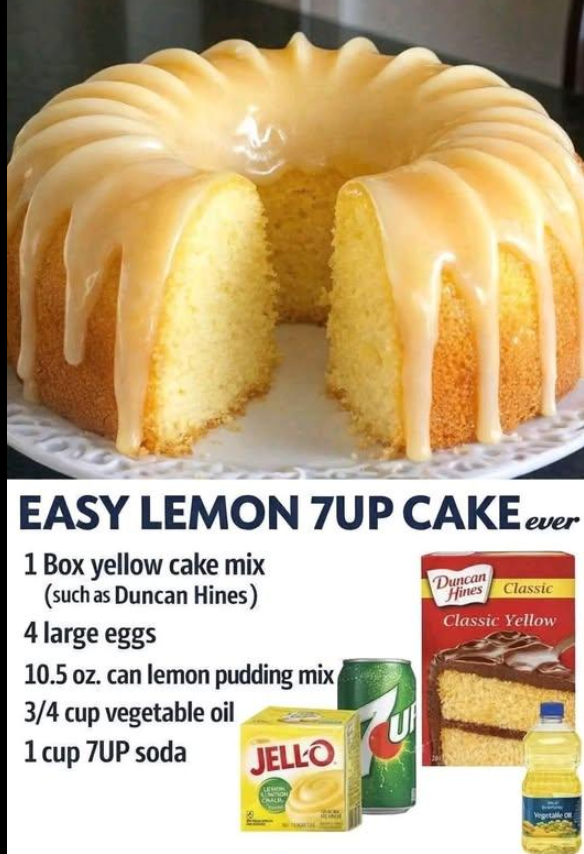
Vintage Lemon 7-Up Cake
The secret to the fluffiest, most buttery citrus crumb.
The Chemistry of the Fizz
In the mid-20th century, a new style of baking emerged in the American South: the Soda Cake. While it might sound like a shortcut, the Lemon 7-Up Cake is a sophisticated exercise in food science. The carbon dioxide in the soda acts as a secondary leavening agent, working alongside the baking powder to create micro-air pockets within the heavy butter batter. The result is a cake that possesses the richness of a pound cake but the lightness of a sponge.
The key to mastering this heirloom recipe lies in the Emulsion. Because this cake uses a high volume of fat (butter) and liquid (eggs and soda), the mixing process must be handled with precision. If the batter “breaks,” you end up with a greasy, dense cake. In this guide, we focus on the “Room Temp Rule” and the “Gradual Addition” method. When executed correctly, you will produce a cake with a golden, slightly crunchy crust and a moist, citrus-infused interior that needs nothing more than a simple glaze.
The Component Checklist & Baker’s Logic
The Structure & Fat
- 1 1/2 Cups Unsalted Butter: Softened to exactly 65°F. It should be pliable but not shiny or oily.
- 2 1/2 Cups Granulated Sugar: Essential for the creaming process that traps air.
- 3 Cups All-Purpose Flour: Provides the protein structure. Sift it twice for the most delicate crumb.
- 1/2 tsp Baking Powder & 1/2 tsp Salt: The chemical lift and flavor balancer.
The Liquids & Lift
- 6 Large Eggs: Must be at room temperature to ensure they emulsify with the butter.
- 3/4 Cup 7-Up (or Sprite): The carbonation provides the “fizz-lift.” Ensure it is fresh and bubbly!
- 2 tbsp Lemon Juice & 1 tbsp Zest: (Recommended Addition) To amplify the natural citrus notes of the soda.
- 1 tsp Vanilla Extract: For the classic aromatic finish.
