In a stand mixer, beat the butter and sugar on medium-high speed for at least 5 to 7 minutes. Most bakers stop too early. You are looking for a mixture that is pale ivory (almost white) and has a texture like thick whipped cream. This is where you build the “skeleton” of the cake.
2. The Egg Emulsion
Add the eggs one at a time. Beat for 30–45 seconds after each addition. This allows the fat in the butter to wrap around the water in the eggs. If the mixture starts to look curdled, add a tablespoon of your flour to help stabilize the emulsion.
3. The Alternating Fold
Turn the mixer to the lowest setting. Add 1/3 of the flour mixture, then 1/2 of the 7-Up. Repeat, ending with the flour. Do not overmix! Overworking the flour at this stage develops gluten, which will turn your tender pound cake into a tough, bread-like loaf.
4. The Pan Prep (Crucial)
Bundt pans are notorious for sticking. Use a “Baker’s Paste” (equal parts melted butter, oil, and flour whisked together) to paint every crevice of the pan. Pour the batter in and tap the pan firmly on the counter three times to release large air bubbles.
5. The Low and Slow Bake
Bake at 325°F (160°C) for 60–75 minutes. Pound cakes need lower temperatures to ensure the center cooks through before the exterior burns. The cake is done when a skewer comes out clean or with just a few moist crumbs.
Chef’s Secrets for the Perfect Release
- The 10-Minute Rule: Let the cake rest in the pan for exactly 10 minutes after removing it from the oven. If you flip it too early, it will crumble; too late, and the sugar will “glue” it to the pan.
- Soda Temperature: Use room temperature soda. Cold soda will shock the butter in the batter, causing it to clump and ruining the smooth texture.
- Sift the Flour: All-purpose flour can be heavy. Sifting it once with the baking powder and salt ensures there are no clumps and distributes the leavening evenly.
The Finishing Touch: Lemon Glaze
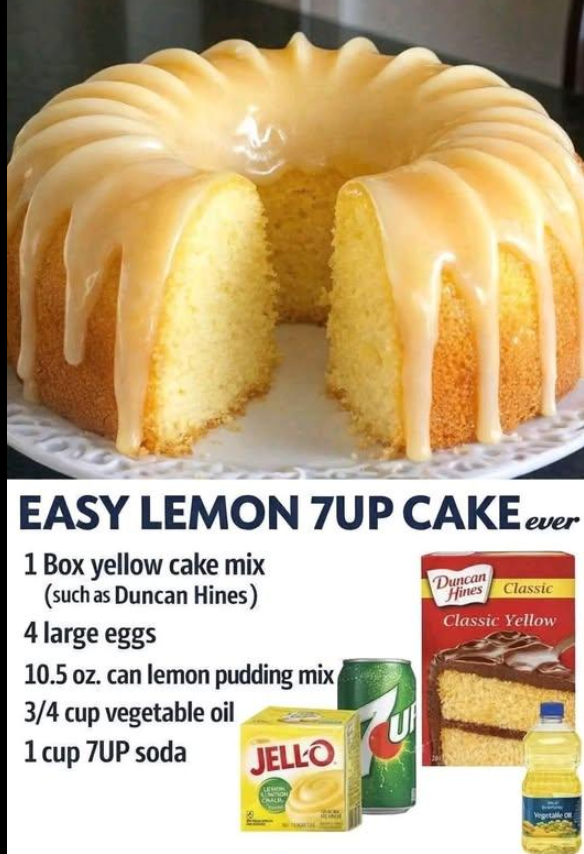
While the cake is cooling, whisk together 2 cups of powdered sugar with 3 tbsp of lemon juice and 1 tbsp of melted butter. Pour over the cake while it is still slightly warm so the glaze can seep into the crust, creating a moist, tangy seal.
Frequently Asked Questions
Can I use Diet Soda?
It is not recommended. The sugar in regular 7-Up contributes to the structure and the “browning” of the cake. Diet sodas also contain artificial sweeteners that can develop a bitter aftertaste when baked at high heat.
Why did my cake sink in the middle?
This is usually caused by one of two things: either the oven door was opened too early, causing a temperature drop, or the butter and sugar were over-creamed, creating too many air bubbles that eventually collapsed.
How should I store this?
This cake actually tastes better on day two! Wrap it tightly in plastic wrap and store it at room temperature. The moisture from the glaze will continue to soften the crumb over time.