The “Folding Technique” is essential here—over-mixing the batter after adding the flour will result in a tough cake. Handle with care!
- Preparation: Preheat your oven to 350°F (175°C). Grease a standard $9 \times 5$ inch loaf pan and line the bottom with parchment paper for an easy release.
- Dry Synthesis: In a medium bowl, whisk together the flour, sugar, baking powder, baking soda, and salt. Stir in the lemon zest, rubbing it into the sugar with your fingers to release the citrus oils.
- Wet Emulsion: In a separate large bowl, whisk the eggs, sour cream, buttermilk, melted butter, lemon juice, and vanilla until completely smooth.
- The Marriage: Gradually pour the wet ingredients into the dry ingredients.Use a spatula to fold the mixture together until just combined. Stop as soon as no streaks of flour remain.
- The Bake: Pour the batter into the prepared loaf pan. Bake for 45–55 minutes, or until a wooden skewer inserted into the center comes out clean or with just a few moist crumbs.
- The Cooling Cycle: Let the cake rest in the pan for 10 minutes before transferring it to a wire rack to cool completely.
Serving and Storage
This pound cake is a rare dessert that actually tastes better the second day, as the lemon oils have more time to permeate the crumb.
The Glaze Finish (Optional):
Whisk 1 cup of powdered sugar with 2 tablespoons of lemon juice. Drizzle over the cooled cake for a professional, crackly sweet finish.
Storage Table:
| Method | Timeframe | Best Practice |
|---|---|---|
| Countertop | 3 Days | Keep wrapped tightly in plastic wrap to prevent the edges from drying. |
| Refrigerator | 1 Week | Best if you prefer a firmer, cold slice of pound cake. |
| Freezer | 3 Months | Wrap in foil and place in a freezer bag. Thaw at room temperature. |
Tips for the Perfect Crumb
“If you don’t have buttermilk on hand, you can make a ‘hack’ by adding 1/2 tablespoon of lemon juice to 1/2 cup of regular milk and letting it sit for 5 minutes.”
- Room Temperature Matters: Cold eggs can cause the melted butter to seize up, creating small lumps in your batter. Warm them in a bowl of tepid water for 5 minutes if you’re in a hurry.
- Zest First: Always zest your lemon before juicing it. It is much easier to grate the peel of a firm, whole lemon than a squeezed one.
- The Center Crack: A natural crack down the center of a pound cake is a sign of a successful rise. If you want a perfectly straight crack, run a buttered knife down the center of the batter just before putting it in the oven.
Variations
Tailor this lemon base to suit different seasons and tastes:
- Lemon Blueberry: Toss 1 cup of fresh blueberries in a tablespoon of flour (to prevent sinking) and fold them into the batter last.
- Poppy Seed Crunch: Add 2 tablespoons of blue poppy seeds to the dry ingredients for a classic texture and visual appeal.
- Lavender Lemon: Infuse the melted butter with 1 teaspoon of dried culinary lavender before mixing for a floral, sophisticated twist.
- The “Luxe” Glaze: Swap the lemon juice in the glaze for heavy cream and a drop of almond extract for a richer topping.
Additional Culinary Tips
- Avoid Overbaking: Start checking the cake at the 40-minute mark. Because of the sugar and dairy, the outside can look dark while the inside is still gooey.
- Sifting the Flour: Sifting is not just for lumps; it aerates the flour, which is vital for a pound cake since we aren’t using a heavy creaming method with a stand mixer.
- Parchment “Sling”: Leave an inch of parchment paper hanging over the long sides of your loaf pan. This creates a “handle” so you can lift the cake out perfectly without damaging the sides.
Conclusion
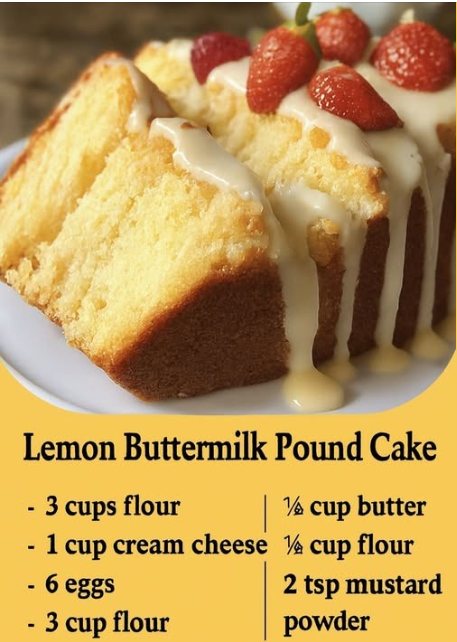
The Lemon Buttermilk Pound Cake is more than just a sweet treat; it is a reliable staple for any home baker. Its success lies in the chemistry of acidity meeting leavening, creating a height and softness that standard cakes simply cannot match. It is bright, comforting, and incredibly versatile. Once you master the delicate balance of citrus and cream, this will undoubtedly become a “don’t lose” recipe in your permanent collection. Enjoy every buttery, zesty bite!
Frequently Asked Questions
- Can I use bottled lemon juice?
- While you can, fresh lemon juice contains natural enzymes and flavors that the bottled stuff lacks. For a cake where lemon is the star, fresh is highly recommended.
- My cake is too dense. What happened?
- This is usually caused by over-mixing. Once you add the dry ingredients, mix only until the flour disappears. Over-mixing develops gluten, which makes the cake chewy like bread rather than soft like cake.
- Can I bake this in a Bundt pan?
- Yes! This recipe fits a 6-cup Bundt pan. If using a standard 10-12 cup Bundt pan, you will need to double the recipe and increase the bake time to approximately 60–70 minutes.