Step 1: The Base Pigmentation
- In a large mixing bowl, combine the **baking soda** and **green food coloring**.
- Whisk until the color is uniform. The Pro Tip: Using gel coloring provides a more vibrant green without adding too much liquid early on.
Step 2: Hydration & Binding
- Slowly add the **water**, one tablespoon at a time.
- Stir until the mixture feels like damp sand. The “Snow” Test: Squeeze a handful in your palm; if it holds its shape without crumbling, it is ready.
Step 3: Surfactant Integration
- Knead in the **dish soap**. The mixture will become slightly more “dough-like.”
- Fold in the **glitter** for that final frosty shimmer.
Step 4: Sculpting the Tree
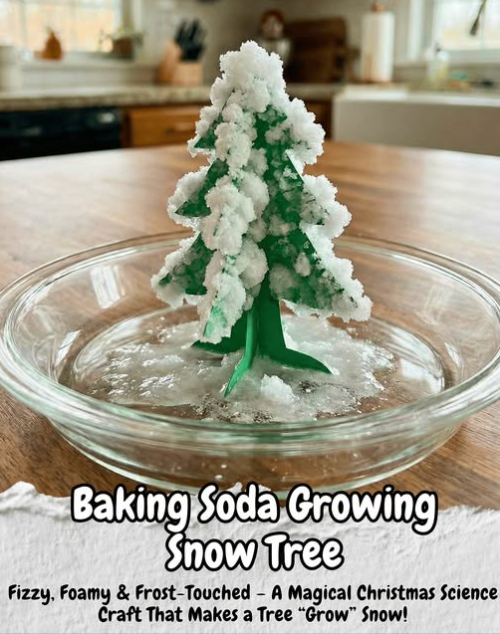
- Form the mixture into a **conical shape** on a tray or in a sensory bin.
- You can use a funnel as a mold for a perfectly geometric tree, or hand-sculpt it for a more “organic” look.
Step 5: The Catalyst Application
- Fill a squeeze bottle or dropper with **vinegar**.
- Apply the vinegar to the peak of the tree.
- The Observation: Watch as the “snow” begins to flow downward, expanding in volume as the gas is trapped by the soap.
Lab Observations & Variations
| Variation | Modification | Result |
|---|---|---|
| The Ice Tree | Freeze the tree for 2 hours before adding vinegar. | A slower, “creeping” eruption that lasts much longer. |
| The Neon Tree | Use fluorescent paint instead of food coloring. | The foam will “glow” under a blacklight—perfect for a “Winter Night” theme. |
| The Fragrant Forest | Add a drop of Peppermint or Pine essential oil. | Adds an olfactory dimension to the sensory play. |
Expert Tips for Success
Tip 1: Temperature Control
Using **chilled vinegar** will actually slow down the chemical reaction slightly, creating a thicker, more controlled “growth” of foam. Warm vinegar will cause a faster, more explosive (and messier) eruption.
Tip 2: Clean-up Strategy
Since this involves food coloring and soap, it can be messy! Since you’ve been doing so well with your health and activity goals, this is a great “floor-play” activity. Lay down a plastic tablecloth first. The baking soda and vinegar actually act as a great natural cleaner for your tray afterward!
Tip 3: Educational Extension
Ask participants: “Why does the foam stop growing?” This introduces the concept of **Limiting Reagents**—the reaction stops when either the vinegar or the baking soda is completely used up.
Conclusion: Magical Chemistry
The Baking Soda Growing Snow Tree is more than just a holiday craft; it is a vivid illustration of how surfactants can alter the physical state of a chemical byproduct. By mastering the ratios of moisture to base, you’ve created a “living” sculpture that captivates the imagination while teaching the fundamentals of science.
Enjoy your magical, foamy winter wonderland!