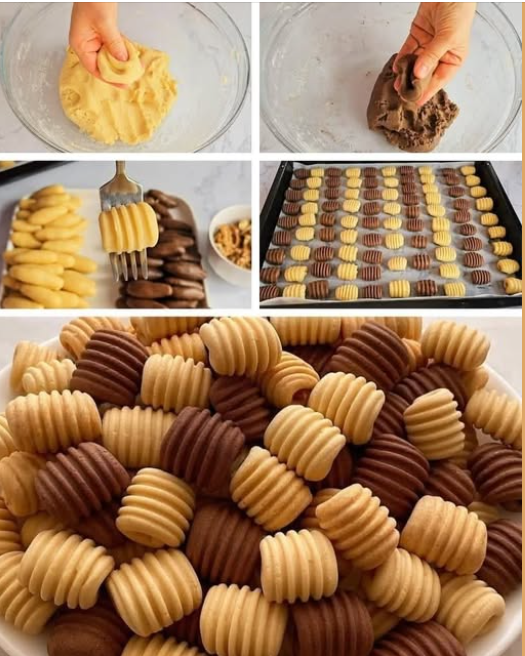
Seven-Minute Cookies: A Masterclass in High-Speed Confectionery
Introduction: The Physics of the “Short” Dough
In the world of rapid baking, Seven-Minute Cookies represent a triumph of Modified Starch Integration. On this Friday, December 26, 2025, these cookies offer a perfect post-holiday treat. The technical brilliance of this recipe lies in the use of Cornstarch to disrupt gluten formation, resulting in a “melt-in-your-mouth” texture that is achieved in a fraction of the time required for traditional shortbread.
This guide explores the Mechanical Emulsification required for structural integrity and the Maillard Reaction that occurs during the accelerated 7-minute bake cycle.
Ingredients: The Molecular Building Blocks
- 2 Cups All-Purpose Flour: The Structural Scaffold. Provides the necessary protein network to hold the cookie’s shape.
- 1/2 Cup Cornstarch: The Texture Modifier. This disrupts the wheat proteins, ensuring a tender, crumbly “short” texture.
- 1 Egg (Room Temperature): The Primary Emulsifier. Contains lecithin, which bridges the gap between fats and moisture.
- 1/2 Cup Butter & 1/4 Cup Oil: The Dual-Phase Lipid System. Butter provides saturated fats for flavor and structure, while oil provides unsaturated fats for long-lasting crispness.
- 1 Cup Powdered Sugar: The Fine-Grain Sweetener. Dissolves instantly to create a smooth, non-gritty dough.
- 1 tsp Baking Powder: The Chemical Leavener. Releases $CO_2$ rapidly under heat to create micro-aeration.
- 1 tsp Vanilla Extract (or 1 packet): The Aromatic Volatile.
Instructions: Engineering the Perfect Crisp
Step 1: The Mechanical Emulsification
Combine the egg, powdered sugar, oil, butter, and vanilla in a bowl. Use a hand mixer to beat until the mixture is creamy and pale. The “Aeration” Science: This step traps microscopic air bubbles within the fat. Without this step, the cookies will be dense rather than crisp.
Step 2: Starch Integration
Add the flour, cornstarch, and baking powder. Knead gently until a soft, pliable dough forms. The “Gluten Management” Rule: Stop kneading as soon as the dough is uniform. Over-working will activate the gluten, turning your tender cookie into a tough biscuit.
Step 3: Surface Area Optimization
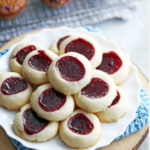
Shape the dough into small balls (about the size of a walnut) and place them on a baking sheet. Flatten them slightly using the tines of a fork. The “Thermal Conductivity” Secret: The fork indentations increase the Surface-Area-to-Volume Ratio, allowing for faster moisture evaporation and a perfectly even 7-minute bake.
Step 4: The Flash-Bake Phase
Bake in a preheated oven at 180°C (350°F) for exactly 7 minutes. The “Maillard” Monitoring: The cookies should remain pale on top but turn a light golden brown on the bottom. This indicates that the sugars have caramelized without drying out the fats.
Serving and Storage: Maintaining Structural Integrity
Serving: Allow the cookies to rest on the baking sheet for 2 minutes before moving them to a wire rack. This allows the Sugar-Starch Matrix to solidify.
Storage: Store in an airtight container. The “Hygroscopic” Warning: Because these cookies have very low moisture content, they will absorb humidity from the air (osmosis) and become soft if left uncovered.
Tips: Pro-Level Nuances
- Room Temperature Eggs: A cold egg will cause the butter to “seize” or clump, ruining the smooth emulsion. Always use a room-temp egg for a Homogenous Mix.
- Sifting: Sift the powdered sugar and cornstarch together to prevent “starch clumps” which can create chalky pockets in the finished cookie.
- Oven Calibration: Since 7 minutes is a very tight window, ensure your oven is fully preheated. Use an oven thermometer to verify the 180°C setting.
Variations: Flavor Infusions
| Variation | The Adjustment | Result |
|---|---|---|
| Chocolate Dipped | Dip half of the cooled cookie in melted dark chocolate. | Elegant, bitter-sweet contrast. |
| Zesty Citrus | Add 1 tsp of fresh lemon or orange zest to the dough. | Bright, refreshing aromatic profile. |
| Spiced Holiday | Add 1/2 tsp of cardamom or cinnamon. | Warm, festive, and comforting. |
Conclusion: A Victory in Efficiency
Seven-Minute Cookies are the ultimate proof that understanding Culinary Physics can yield gourmet results in minimal time. By balancing the lubrication of lipids with the moisture-wicking properties of cornstarch, you create a cookie that is functionally superior and texturally perfect. Enjoy your 7-minute success!
Frequently Asked Questions
- Why did my cookies spread too much?
- This is usually due to Lipid Saturation. If the butter was melted instead of softened, or if you used too much oil, the dough lacks the structural tension to hold its shape.
- Can I substitute the oil for more butter?
- Yes, you can use 3/4 cup of butter total. However, the oil is what gives these cookies their signature “snap” and long-lasting crispness.
- Can I use granulated sugar?
- Granulated sugar will result in a grainier texture and may cause the cookie to spread more. Powdered sugar is essential for the Fine-Pore Crumb.